In 1854 when the Wellington Clock Tower was originally erected at the southern end of London Bridge it had four clock faces and housed a small telegraph office. It was relocated to Swanage, Dorset in 1868 when local building contractor George Burt disassembled it, transported it as ship's ballast and gave it to his friend Thomas Docwra, another builder, as a gift. For obscure reasons, the original spire was removed in 1904 and replaced by an ogee-shaped copper cupola. The tower now stands on private property.
Showing posts with label Tower. Show all posts
Friday, February 03, 2023
Tuesday, January 31, 2023
Cranmore Tower, Somerset
Located on the highest point of the Mendip Way, Cranmore Tower is about 45m (148 ft) tall. Built by Thomas Henry Wyatt for John Moore Paget of Cranmore Hall between 1862 and 1864, it is now on private land and closed to visitors. Unsurprisingly it was used by the Home Guard and Royal Corps of Signals during the Second World War.
Monday, August 30, 2021
The Mad Jack Walking Tour
Enjoy a walk, drive or cycle ride around the Sussex village of Brightling to see the intriguing follies built by John 'Mad Jack' Fuller. Download a pdf of the map and guide here.
Labels:
Brightling,
Folly,
Obelisk,
Observatory,
Pyramid,
Sugar Loaf,
Temple,
Tower
Saturday, March 07, 2015
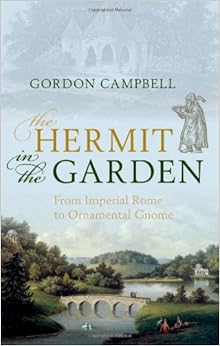
The Hermit in the Garden: From Imperial Rome to Ornamental Gnome

by Gordon Campbell, Oxford University Press, 2013
"In 1777 John Fuller, who is popularly but inaccurately known
as Mad Jack Fuller (he seems to have been wholly sane), inherited from his
uncle the family estate of Rose Hill, in Brightling (Sussex). After a tumultuous political career, in the
course of which he defended he living conditions of plantation slaves (he owned
a plantation in Jamaica) and was ejected from the House of Commons for
drunkenness, Fuller left parliament at the dissolution of 1812 and settled at
Rose Hill, where he had already embarked on the construction of a memorable set
of follies. He began with a Coadestone (i.e. ceramic) summer house with a ‘Tudor’
arch (restored in 1992) and went on to commission his own mausoleum (an 8-metre
high pyramid in Brightling churchyard), a rotunda garden temple, an obelisk
known as the Needle, a hermit’s tower and a building known as the Sugar Loaf
(an 11-metre cone which alludes to his sugar plantation).
The 8-metre hermit’s tower was built with a view to accommodating
an ornamental hermit, and Fuller is said to have advertised for a hermit with
the usual conditions of service. Here,
for example is the account in Follies: A National Trust Guide:
"The
requirements were a little excessive: no shaving, no washing, no
cutting
of hair and nails, no conversation with any outsider for a period
of
seven years, after which the happy hermit would be made a Gentleman.
No
takers.”
[No page numbers give in ebook version]
Thursday, March 14, 2013
Postcard 2: The Tower, Brightling
Published by T.P. Croft, Station Road, Robertsbridge
Postmarked 10:35 am, 5 Nov 1927, Vinehall St, Robertsbridge S.O. Sussex
To Mr & Mrs Rachett, Elm Villa, Station Road, Sandown, I of W (Isle of Wight)
Friday Whatlington
Thanks so much for all news delighted to hear Aunt P is getting on so nicey & I am feeling all the better for the change. Fireworks are being practiced & we are jumping out of our skins. Kit the dog jumped right out of the fireplace. I have been to Brightling for one night, this strange Tower is there. We had a car Wednesday & went all round to see the relatives. 35 miles it was very foggy indeed. I missed my bus yesterday & had to walk 5 miles, glad to get back here. Love to Mrs Vince and yourselves from Ida Aunt P & myself. Yours M. K.
Saturday, December 17, 2005
Last Fortified Towers in Britain

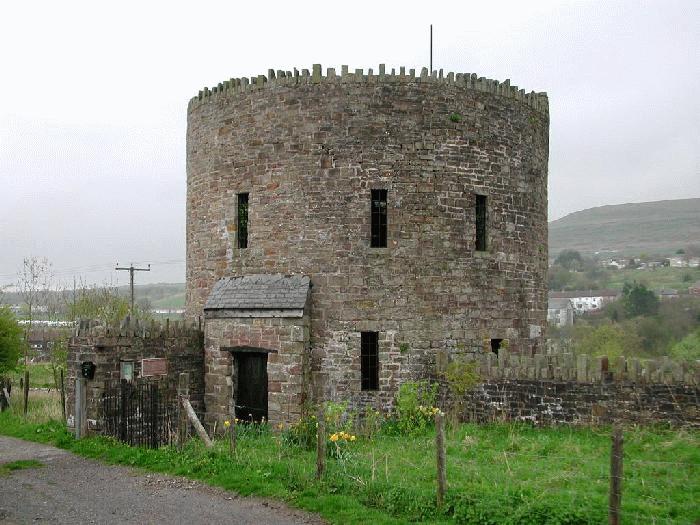
The Round Towers at Roundhouse Farm in Nantyglo, Wales, were built by industrialists Crawshay and Joseph Bailey, who, by the early 19th century controlled much of the iron resources in the region, including the massive iron works at Nantyglo located about a mile south of Brynmawr. Fearing that their workers would one day rise against them, in 1816 the Baileys built the last fortified tower in Britain as a place of refuge against a potential worker's revolt. Today these ruins stand as unique and important reminder of the region's industrial strife.
Read the full article here.
Tuesday, December 16, 2003
Extract from "Sussex" by S.P.B. Mains
Pages 172-173. First Printed 1929. The Richard Press Ltd.
We turn south here, leaving the Tunbridge Wells-Hastings railway on the east of us, and cross or wander along the valley of the Dudwell, a tributary of the Rother, in order to visit Brightling Beacon (646 feet) and Dallington. The Early English church of Brightling contains a bust of John Fuller, the patron of J.M.W. Turner. There is a fifteenth-century brass and fourteenth century stained glass. On the Beacon Fuller built an obelisk, called the Needle, and an observatory. When he was offered a peerage, Fuller said, "I was born Jack Fuller and Jack Fuller I'll die." He founded the Fullerian professorship and bought Bodiam Castle when it stood in some danger of being destroyed. He had a reputation for swearing in Parliament and once referred to the Speaker as "the insignificant little fellow in a wig." He armed his coachmen and footmen with swords and pistols whenever he drove to London.
Dallington has a stone spire set on its solid church tower, which bears the emblem of the Pelham buckle.
We turn south here, leaving the Tunbridge Wells-Hastings railway on the east of us, and cross or wander along the valley of the Dudwell, a tributary of the Rother, in order to visit Brightling Beacon (646 feet) and Dallington. The Early English church of Brightling contains a bust of John Fuller, the patron of J.M.W. Turner. There is a fifteenth-century brass and fourteenth century stained glass. On the Beacon Fuller built an obelisk, called the Needle, and an observatory. When he was offered a peerage, Fuller said, "I was born Jack Fuller and Jack Fuller I'll die." He founded the Fullerian professorship and bought Bodiam Castle when it stood in some danger of being destroyed. He had a reputation for swearing in Parliament and once referred to the Speaker as "the insignificant little fellow in a wig." He armed his coachmen and footmen with swords and pistols whenever he drove to London.
Dallington has a stone spire set on its solid church tower, which bears the emblem of the Pelham buckle.
Labels:
Brightling,
Obelisk,
Observatory,
Parliament,
Tower,
Turner
Wednesday, December 10, 2003
Extract from "Highways & Byways in Sussex" by E.V. Lucas
Pages 380-381, Macmillan and Co, Limited 1912
Four miles west of Robertsbridge, up hill and down, is Brightling, whose Needle, standing on Brightling Down, 646 feet high, is visible from most of the eminences in this part of Sussex.
The obelisk, together with the neighbouring observatory, was built on the site of an old beacon by the famous Jack Fuller - famous no longer, but in his day (he died in 1834 aged seventy-seven) a character both in London and in Sussex. He was big and bluff and wealthy and the squire of Rose Hill. He sat for Sussex from 1801 to 1812, and was once carried from the house by the Sergeant at Arms and his minions, for refusing to give way in a debate and calling the Speaker "the insignificant little fellow in a wig." His election cost him £10,000 plus £30,000 subscribed by the county. When Pitt offered him a peerage he said no: "I was born Jack Fuller and Jack Fuller I'll die." When he travelled from Rose Hill to London Mr. Fuller's progress was almost regal. The coach was provisioned as if for arctic exploration and coachman and footmen alike were armed with swords and pistols. ("Honest Jack," as Mr Lower remarks, put a small value upon the honesty of others.) Mr. Fuller had two hobbies, music and science. He founded the Fullerian professorships (which he called his two children), and contributed liberally to the Royal Institution; and his musical parties in London were famous. But whether it is true that when the Brightling choir dissatisfied him he presented the church with nine bassoons, I cannot say.
John Fuller has a better claim to be remembered in Sussex by his purchase of Bodiam Castle, when its demolition was threatened, and by his commission to Turner to make pictures in the Rape of Hastings, five of which were engraved and published in folio form in 1819, under the title Views in Sussex. One of these represents the Brightling Observatory as seen from Rosehill Park. As a matter of fact, the observatory, being of no interest, is almost invisible, although Mr. Reinagle, A.R.A., who supplies the words to the pictures, calls it the "most important point in the scene". Furthermore, he says that the artist has expressed a shower proceeding "from the left corner". Another picture is the Vale of Ashburnham, with the house in the middle distance, Beachy Head beyond, and in the foreground woodcutters carrying wood in an ox waggon. "The whole," says Mr. Reinagle, A.R.A., "is happily composed, if I may use the term." He then adds: "The eye of the spectator, on looking at this beautifully painted scene, roves with an eager delight from one hill to another, and seems to play on the dappled woods till arrested by the seat of Lord Ashburnham." Other picutes in the folio are "Pevensey Bay from Crowhurst Park," a very beautiful scene, "Battle Abbey," and " The Vale of Heathfield," painted from above the road, with Heathfield House on the left, the tower on the right, the church in the centre in the middle distance, and the sea on the horizon: an impressive but not strictly veracious landscape.
In Brightling church is a bust to John Fuller, with the motto: "Utile nihil quod non
honestum." A rector in Fuller's early days was William Hayley, who died in 1789, a zealous antiquary. His papers relating to the history of Sussex, are now, like those of Sir William Burrell, in the British Museum.
Four miles west of Robertsbridge, up hill and down, is Brightling, whose Needle, standing on Brightling Down, 646 feet high, is visible from most of the eminences in this part of Sussex.
The obelisk, together with the neighbouring observatory, was built on the site of an old beacon by the famous Jack Fuller - famous no longer, but in his day (he died in 1834 aged seventy-seven) a character both in London and in Sussex. He was big and bluff and wealthy and the squire of Rose Hill. He sat for Sussex from 1801 to 1812, and was once carried from the house by the Sergeant at Arms and his minions, for refusing to give way in a debate and calling the Speaker "the insignificant little fellow in a wig." His election cost him £10,000 plus £30,000 subscribed by the county. When Pitt offered him a peerage he said no: "I was born Jack Fuller and Jack Fuller I'll die." When he travelled from Rose Hill to London Mr. Fuller's progress was almost regal. The coach was provisioned as if for arctic exploration and coachman and footmen alike were armed with swords and pistols. ("Honest Jack," as Mr Lower remarks, put a small value upon the honesty of others.) Mr. Fuller had two hobbies, music and science. He founded the Fullerian professorships (which he called his two children), and contributed liberally to the Royal Institution; and his musical parties in London were famous. But whether it is true that when the Brightling choir dissatisfied him he presented the church with nine bassoons, I cannot say.
John Fuller has a better claim to be remembered in Sussex by his purchase of Bodiam Castle, when its demolition was threatened, and by his commission to Turner to make pictures in the Rape of Hastings, five of which were engraved and published in folio form in 1819, under the title Views in Sussex. One of these represents the Brightling Observatory as seen from Rosehill Park. As a matter of fact, the observatory, being of no interest, is almost invisible, although Mr. Reinagle, A.R.A., who supplies the words to the pictures, calls it the "most important point in the scene". Furthermore, he says that the artist has expressed a shower proceeding "from the left corner". Another picture is the Vale of Ashburnham, with the house in the middle distance, Beachy Head beyond, and in the foreground woodcutters carrying wood in an ox waggon. "The whole," says Mr. Reinagle, A.R.A., "is happily composed, if I may use the term." He then adds: "The eye of the spectator, on looking at this beautifully painted scene, roves with an eager delight from one hill to another, and seems to play on the dappled woods till arrested by the seat of Lord Ashburnham." Other picutes in the folio are "Pevensey Bay from Crowhurst Park," a very beautiful scene, "Battle Abbey," and " The Vale of Heathfield," painted from above the road, with Heathfield House on the left, the tower on the right, the church in the centre in the middle distance, and the sea on the horizon: an impressive but not strictly veracious landscape.
In Brightling church is a bust to John Fuller, with the motto: "Utile nihil quod non
honestum." A rector in Fuller's early days was William Hayley, who died in 1789, a zealous antiquary. His papers relating to the history of Sussex, are now, like those of Sir William Burrell, in the British Museum.
Labels:
Brightling,
Heathfield,
Obelisk,
Observatory,
Royal Institution,
Tower,
Turner
Saturday, April 20, 2002
Mad Jack and Bodiam Castle
"Bodiam Castle played a part in the life of John Fuller and it would be quite reasonable to state that but for the action of the colourful squire in 1828 there would be no castle to view at all.
For in 1828 Bodiam castle was nothing more than a decaying neglected shambles of a building. The damage inflicted during the Civil war in 1645 had been allowed to deteriorate to such a state that the castle was in danger of having to be totally demolished. A firm of Hastings builders stood ready to carry out the task.
However a last ditch attempt to find a purchaser was made and posters were displayed which declared 'the ancient castle of Bodiham and 25 acres of land' were to be sold by auction under the hammer of Mr George Robins of Covent Garden, London - by direction of a man of rank. The auction would take place 'at the Auction Mart, opposite the Bank of England, on Thursday 18th September 1828, at Twelve o'clock.
The man of rank - and owner of the castle at that time - was Baronet Sir Godfrey Webster, of the well known Sussex family, who were also owners of the nearby Battle Abbey estate.
..........Such was the sorry condition of the abbey estate in 1742 that the architect Sir Horace Walpole was prompted to note that 'the grounds and what has been the park, lie in a vile condition'. It would appear that Bodiam Castle had declined to the same level in 1828. Thankfully this time there was to be a saviour.
Source: "Fuller of Sussex, A Georgian Squire" - Geoff Hutchinson
"In 1829 Bodiam Castle was almost a wreck. A local man wanted to buy it in order to use it's stones in his buildings. Lord Curzon tells of its purchase by Fuller to save it from absolute destruction.
When the third Sir Godfrey Webster was hard-up he sold, for £3000, the castle and lands, amounting to 24 acres, 3 roods and 8 perches, to 'Honest Jack' who restored the southern Postern Tower and fitted folding oak gates in the main entrance. When Fuller died his cousin Augustus Elliot Fuller, inherited the castle as tenant for life. He was followed by his only son, Owen John Augustus Fuller, who married Clara Meyrick and assumed the additional name Meyrick.
He sold the castle and manor in 1864, to George Cubitt, MP (later the first Lord Ashcombe) for something over £5000.
Lord Curzon bought the castle from Ashcombe, restored it thoroughly and then gave it to the nation.
We have to thank 'Honest Jack' for saving, for us all, one of the finest castles in the south. The museum by the castle contains a picture of him in memory of his public spirited action."
Source: "John Fuller Esquire of Rose-Hill" - James Lawrie
For in 1828 Bodiam castle was nothing more than a decaying neglected shambles of a building. The damage inflicted during the Civil war in 1645 had been allowed to deteriorate to such a state that the castle was in danger of having to be totally demolished. A firm of Hastings builders stood ready to carry out the task.
However a last ditch attempt to find a purchaser was made and posters were displayed which declared 'the ancient castle of Bodiham and 25 acres of land' were to be sold by auction under the hammer of Mr George Robins of Covent Garden, London - by direction of a man of rank. The auction would take place 'at the Auction Mart, opposite the Bank of England, on Thursday 18th September 1828, at Twelve o'clock.
The man of rank - and owner of the castle at that time - was Baronet Sir Godfrey Webster, of the well known Sussex family, who were also owners of the nearby Battle Abbey estate.
..........Such was the sorry condition of the abbey estate in 1742 that the architect Sir Horace Walpole was prompted to note that 'the grounds and what has been the park, lie in a vile condition'. It would appear that Bodiam Castle had declined to the same level in 1828. Thankfully this time there was to be a saviour.
Source: "Fuller of Sussex, A Georgian Squire" - Geoff Hutchinson
"In 1829 Bodiam Castle was almost a wreck. A local man wanted to buy it in order to use it's stones in his buildings. Lord Curzon tells of its purchase by Fuller to save it from absolute destruction.
When the third Sir Godfrey Webster was hard-up he sold, for £3000, the castle and lands, amounting to 24 acres, 3 roods and 8 perches, to 'Honest Jack' who restored the southern Postern Tower and fitted folding oak gates in the main entrance. When Fuller died his cousin Augustus Elliot Fuller, inherited the castle as tenant for life. He was followed by his only son, Owen John Augustus Fuller, who married Clara Meyrick and assumed the additional name Meyrick.
He sold the castle and manor in 1864, to George Cubitt, MP (later the first Lord Ashcombe) for something over £5000.
Lord Curzon bought the castle from Ashcombe, restored it thoroughly and then gave it to the nation.
We have to thank 'Honest Jack' for saving, for us all, one of the finest castles in the south. The museum by the castle contains a picture of him in memory of his public spirited action."
Source: "John Fuller Esquire of Rose-Hill" - James Lawrie
Saturday, February 10, 2001
Who was John "Mad Jack" Fuller?
The eccentric John Mad Jack Fuller, squire of Brightling, is a fascinating topic of research for me. Born in 1757 Fuller was in some ways a typical English squire and Member of Parliament in the Georgian Period. However, his penchant for building follies and his ebullient personality are the stuff of which legends are made. He was a patron of the arts and sciences who made valuable contributions to the community.
In 1777, at the age of 20, Jack Fuller inherited his family's wealth and mansion, Rose Hill at Brightling, East Sussex. He served 4 terms in parliament and was on more than one occasion removed from the House for raucous behaviour. Fuller was a huge man who wore his hair in a pig tail. He never married and had no children.
THE FOLLIES
He is buried in a 25 ft tall pyramid in the churchyard of St. Thomas of Canterbury church, a structure he had built 24 years before he died in 1834. Legend had it that he was interred in full evening dress, sitting upright at a table set with a roast chicken and a bottle of claret. Renovations to the pyramid in the 1980's put this tale to rest.
It is also said that when in London, Fuller bet that he could see the spire of Dallington church from his house. Upon returning home he found that this was not the case and sent a group of men out to erect a conical building designed to resemble the spire. Needless to say, Fuller won the bet and the Sugar Loaf as it has come to be called still stands.
Fuller's Observatory was furnished with state of the art astronomy equipment. It is now a private home. The Observatory, and quite possibly the Greek Rotunda Temple, was designed by noted architect Sir Robert Smirke who also designed the British Museum in London among other important commissions. The Obelisk or Brightling Needle, another of Fuller's legacies, is 65 ft high and is most likely a monument to celebrate Wellington's victory over Napoleon in 1815.
PHILANTHROPY
Among Fuller's lasting contributions to the community are: the Belle Tout lighthouse at Beachy Head and the barrel organ at Brightling church which is now the largest of its kind in full operation in Britain today. He is also credited with saving Bodiam castle from demolition as he purchased it from a firm of builders and had it restored. The Tower, another odd structure, is said to have been built by Fuller so that he could keep an eye on the progress of workmen at Bodiam. Fuller was a founding member of the Royal Institution and created two professorships which have endured into the 21st Century.
In 1777, at the age of 20, Jack Fuller inherited his family's wealth and mansion, Rose Hill at Brightling, East Sussex. He served 4 terms in parliament and was on more than one occasion removed from the House for raucous behaviour. Fuller was a huge man who wore his hair in a pig tail. He never married and had no children.
THE FOLLIES
He is buried in a 25 ft tall pyramid in the churchyard of St. Thomas of Canterbury church, a structure he had built 24 years before he died in 1834. Legend had it that he was interred in full evening dress, sitting upright at a table set with a roast chicken and a bottle of claret. Renovations to the pyramid in the 1980's put this tale to rest.
It is also said that when in London, Fuller bet that he could see the spire of Dallington church from his house. Upon returning home he found that this was not the case and sent a group of men out to erect a conical building designed to resemble the spire. Needless to say, Fuller won the bet and the Sugar Loaf as it has come to be called still stands.
Fuller's Observatory was furnished with state of the art astronomy equipment. It is now a private home. The Observatory, and quite possibly the Greek Rotunda Temple, was designed by noted architect Sir Robert Smirke who also designed the British Museum in London among other important commissions. The Obelisk or Brightling Needle, another of Fuller's legacies, is 65 ft high and is most likely a monument to celebrate Wellington's victory over Napoleon in 1815.
PHILANTHROPY
Among Fuller's lasting contributions to the community are: the Belle Tout lighthouse at Beachy Head and the barrel organ at Brightling church which is now the largest of its kind in full operation in Britain today. He is also credited with saving Bodiam castle from demolition as he purchased it from a firm of builders and had it restored. The Tower, another odd structure, is said to have been built by Fuller so that he could keep an eye on the progress of workmen at Bodiam. Fuller was a founding member of the Royal Institution and created two professorships which have endured into the 21st Century.
Labels:
Belle Tout,
Folly,
Obelisk,
Observatory,
Parliament,
Pyramid,
Royal Institution,
Smirke,
Sugar Loaf,
Temple,
Tower
Subscribe to:
Posts (Atom)